
Call us now :08045476033
 Send Inquiry
Honeycomb Breadboard Optical table
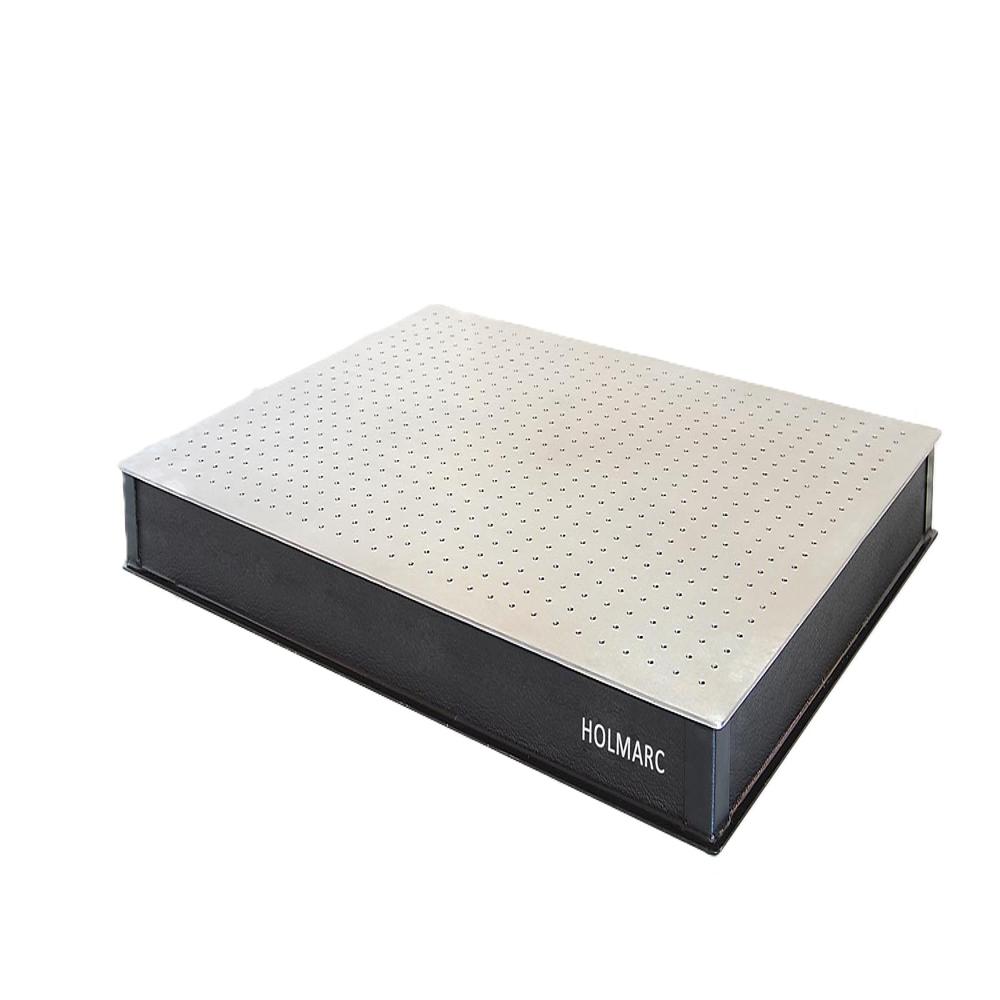
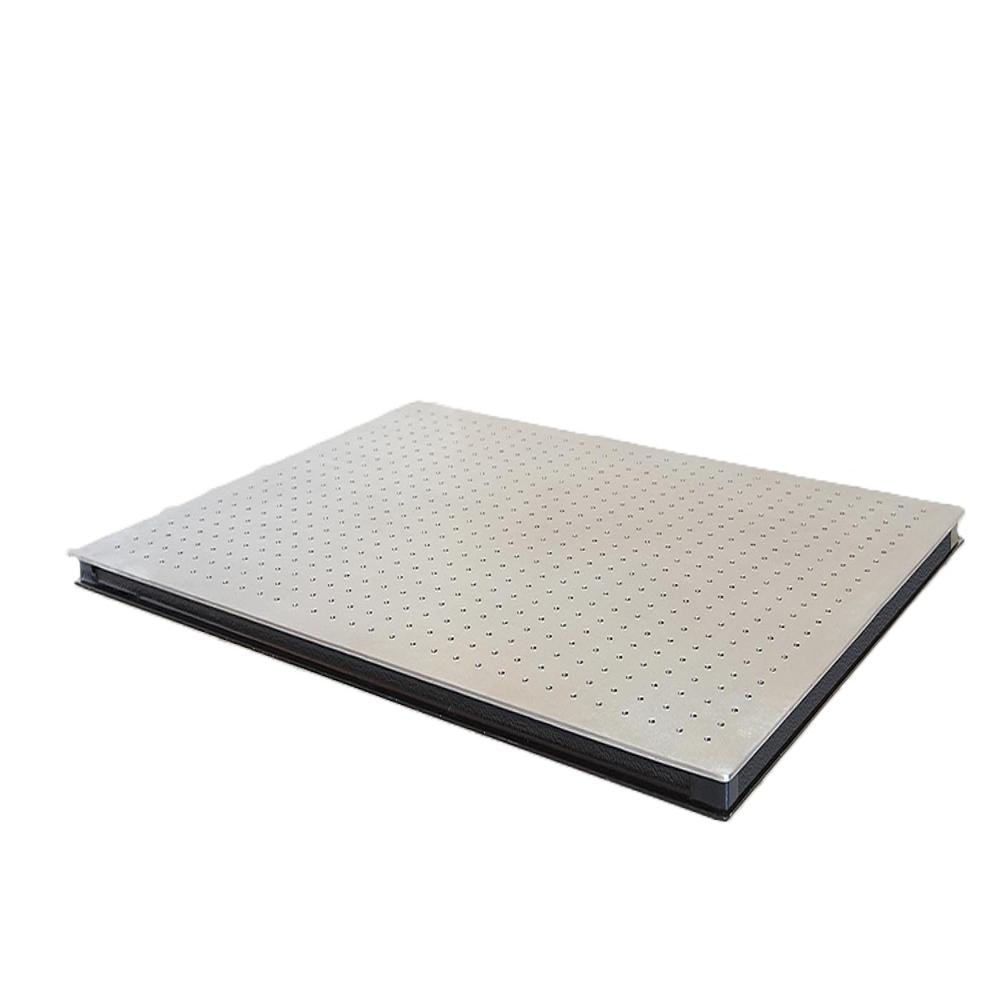
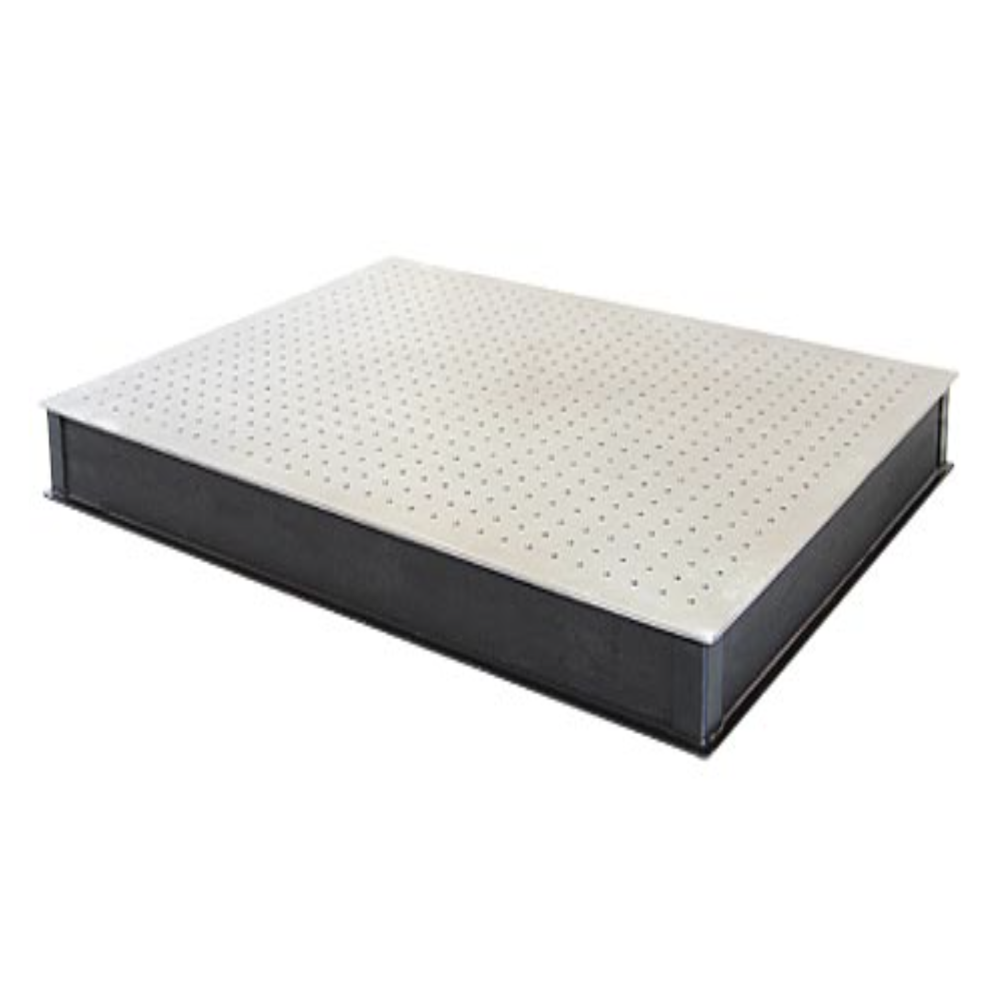

Honeycomb Breadboard Optical table Specification
- Theory
- Mechanically damped honeycomb core for vibration isolation
- Accuracy
- High precision, surface flatness typically within 0.1mm per meter
- Color
- Black anodized top with natural aluminum frame
- Objective
- Provides a stable, vibration-free platform for optical experiments
- Measurement
- Metric grid, 25mm hole spacing
- Product Type
- Optical breadboard/table
- Material
- Magnetic stainless steel top, aluminum honeycomb core
- Size
- 600mm x 900mm x 62mm
- Weight
- Approximately 24 kg
- Length
- 900mm
- Function
- Support and stabilize optical components and experiments
- Compatibility
- Universal for various optical and mechanical mounts
- Mounting Holes
- 25mm pitch, M6 threaded holes over full surface
- Load Capacity
- Up to 200 kg distributed load
- Sidewall Material
- Extruded aluminum, anodized finish
- Thermal Stability
- Low thermal expansion coefficient for long-term experiments
- Tabletop Thickness
- 62mm
- Surface Finish
- Matte, scratch-resistant, magnetically receptive
- Flatness Criteria
- 0.1mm over entire surface
- Corrosion Resistance
- High, suitable for laboratory environments
- Vibration Transmission
- Less than 10 microns under typical lab conditions
- Edge Design
- Chamfered edges for safety and precision alignment
- Core Structure
- Hexagonal honeycomb core with 10mm cell diameter
- Damping Type
- Internal passive damping reduces vibration transmission
Honeycomb Breadboard Optical table Trade Information
- Minimum Order Quantity
- 1 Piece
- Supply Ability
- 2 Pieces, Piece Per Month
- Delivery Time
- 5 Week
- Sample Available
- No
About Honeycomb Breadboard Optical table
Product Details:
| Core Type | Honeycomb |
| Core Cell Size | 6 sq. cm (approx) |
| Finish | Side walls finished with black form sheet (matte finish) |
| Top Plate | 5 mm thick magnetic / non magnetic SS top skin |
| Design | M6 tapped holes on 25 mm grid |
| Bottom Plate | 5 mm thick epoxy coated steel |
| Breadboard Core | 0.25 mm thick aluminium honeycomb core |
| Brand | Holmarc |
| Country of Origin | Made in India |
| Standard Breadboard | |||
| Model No | Length (mm) | Width (mm) | Height (mm) |
| BB 60-30 | 600 | 300 | 60 |
| BB 60-60 | 600 | 600 | 60 |
| BB 90-60 | 900 | 600 | 100 |
| BB 90-90 | 900 | 900 | 100 |
| BB 120-90 | 1200 | 900 | 100 |
| BB 120-120 | 1200 | 1200 | 100 |
| BB 180-120 | 1800 | 1200 | 100 |
| Non Magnetic Standard Breadboard | |||
| BBNM 60-30 | 600 | 300 | 60 |
| BBNM 60-60 | 600 | 600 | 60 |
| BBNM 90-60 | 900 | 600 | 100 |
| BBNM 90-90 | 900 | 900 | 100 |
| BBNM 120-90 | 1200 | 900 | 100 |
| BBNM 120-120 | 1200 | 1200 | 100 |
| BBNM 180-120 | 1800 | 1200 | 100 |
Ultra-Stable Design for Optical Experiments
Built with a mechanically damped honeycomb core, the table minimizes vibrations to under 10 microns, ensuring consistent accuracy and repeatable results in delicate optical setups. Its robust structure and internal passive damping make it indispensable for long-term scientific research.
Precision and Versatility Across Applications
The breadboard features a 25mm pitch M6 threaded hole pattern across the surface for universal compatibility with various optical and mechanical mounts. Precision chamfered edges and a magnetically receptive surface enable secure, flexible alignment of components across laboratory workflows.
Durability Meets Safety in Laboratory Settings
High corrosion resistance, a matte scratch-resistant finish, and anodized extruded aluminum sidewalls ensure longevity and easy maintenance. Chamfered edges provide additional safety and alignment support, while the black anodized top offers a professional aesthetic ideal for advanced research environments.
FAQ's of Honeycomb Breadboard Optical table:
Q: How does the honeycomb core structure improve vibration isolation?
A: The hexagonal honeycomb core-combined with internal passive damping-efficiently disperses vibrational energy, reducing transmission to less than 10 microns. This ensures optical experiments remain stable, minimizing external disturbances for highly sensitive measurements.Q: What mounting options are available on this breadboard optical table?
A: The table features a full-surface metric grid of M6 threaded holes spaced at 25mm intervals, allowing for universal mounting of various optical and mechanical components. This design supports a wide range of laboratory setups and adjustments.Q: When is this optical table suitable for use in laboratory environments?
A: This breadboard is ideal for any laboratory requiring vibration-free platforms, high load capacity, and thermal stability, such as in photonics, laser research, or precision measurement. Its high corrosion resistance and low thermal expansion make it particularly suitable for long-term, demanding use.Q: Where is this honeycomb breadboard optical table manufactured and supplied?
A: The product is manufactured and supplied in India, ensuring local support and availability for laboratories and research institutes across the region.Q: What is the process for aligning components on this table?
A: Precision is maintained using the 25mm metric grid and M6 threaded holes, which enable accurate component mounting. Chamfered edges assist with safe and precise alignment, while the magnetically receptive surface adds flexibility for magnetic fixtures.Q: How does the table support long-term experiments with thermal stability?
A: The honeycomb core and choice of materials have a low thermal expansion coefficient, maintaining surface integrity and flatness (0.1mm) even during extended experiments, thereby preventing misalignment due to temperature fluctuations.Q: What are the main benefits of using this optical breadboard in scientific research?
A: Key advantages include excellent vibration isolation, high surface accuracy and flatness, flexible mounting, superior corrosion resistance, and robust load capacity-all essential for consistent, precise results in research and development settings.Tell us about your requirement

Price:
Quantity
Select Unit
- 50
- 100
- 200
- 250
- 500
- 1000+
Additional detail
Mobile number
Email


 Send Inquiry
Our Products

292, IInd Floor, Pocket B-1, Siraspur,Delhi - 110042, India

Mr Devinder Pal Ghai Sc G
(Director)
Mobile :08045476033
 Send Inquiry
 Send SMS
Developed and Managed by Infocom Network Private Limited.
